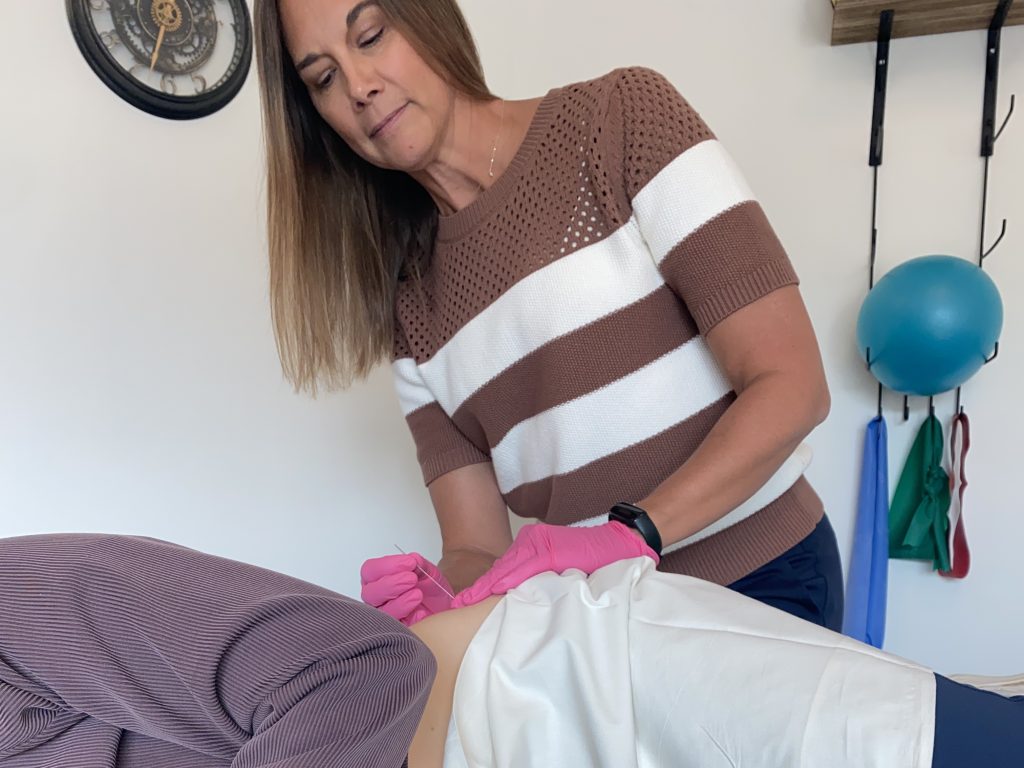

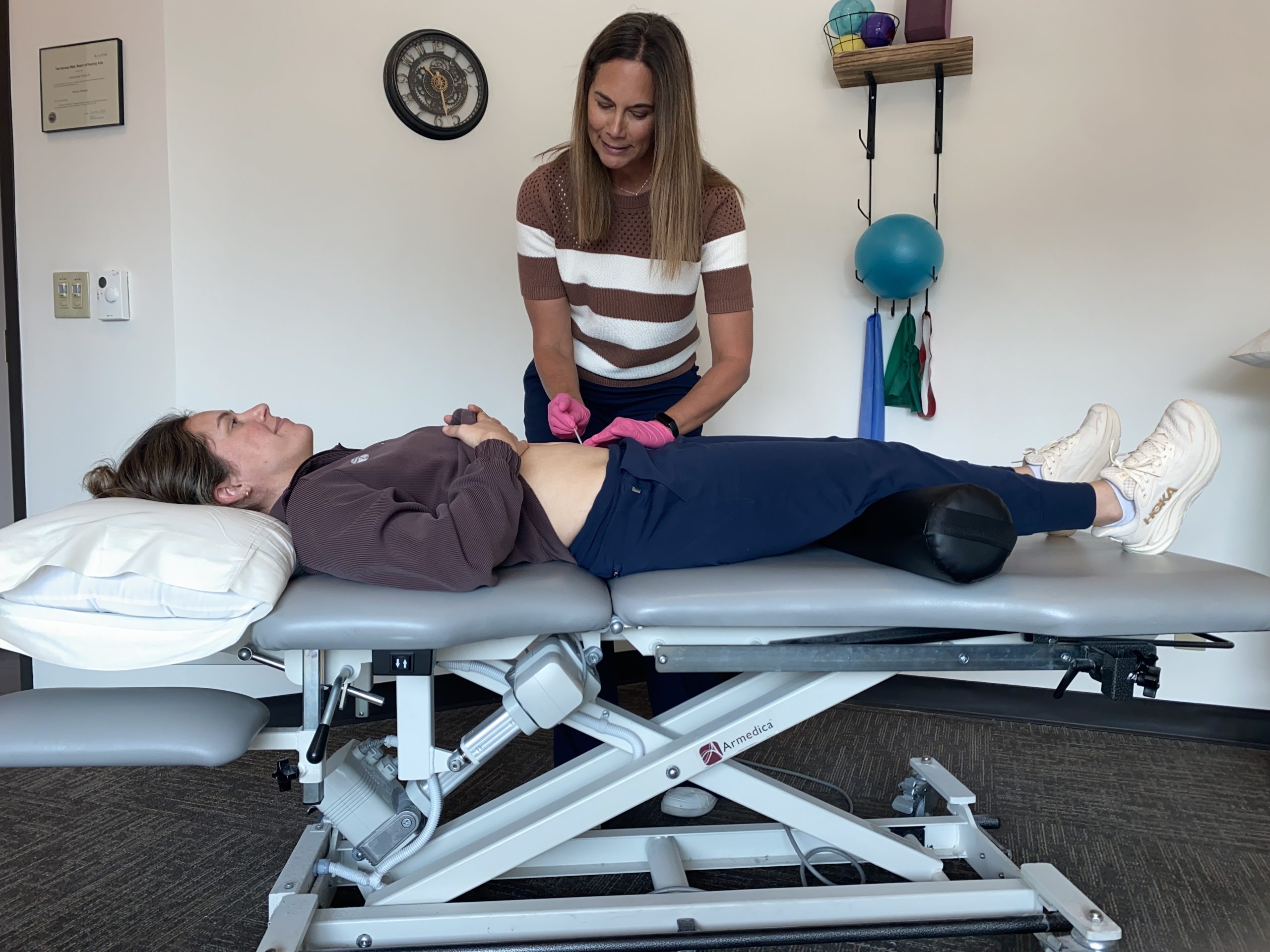
What is Dry Needling?
Dry needling is a skilled intervention that uses a thin filiform needle to penetrate the skin and stimulate underlying myofascial trigger points, muscular, and connective tissues for the management of neuromusculoskeletal pain and movement impairments. Dry needling (DN) is a technique used to treat dysfunctions in skeletal muscle, fascia, and connective tissue to diminish persistent pain and restore body structure and function leading to improved activity and participation.
What is a trigger point?
A trigger point is a hyperirritable point in a muscle that is associated with a palpable taught band, or “knot”; This area becomes painful at the site and can also refer pain to other areas of the body.
Does it hurt?
A healthy muscle feels very little discomfort with insertion of this needle. However if the muscle is sensitive and has active trigger points within it, the subject will feel a sensation like a muscle cramp, also called a twitch response. This twitch response is what causes a neurological reflex to occur, and helps to restore normal muscle function.
What is the difference between Dry Needling and Acupuncture?
The objectives and philosophy behind the use of dry needling by physical therapists is not based on traditional Chinese medicine. The performance of dry needling by physical therapists is based on Neuroanatomy and current scientific study of the musculoskeletal and nervous systems. The placement of needles for dry needling is based on a thorough evaluation of your musculoskeletal system, depending on where trigger points or tissue dysfunction is found.
Both Dry Needling and Acupuncture do, however, use the same tool; a solid needle filament.
Who can benefit from Dry Needling?
Dry Needling can help with a variety of pain problems including, but not limited to:
- Acute/Chronic injuries
- Headaches
- Neck/Back pain
- Tendonitis
- Muscle Spasms
- Sciatica
- Hip/Knee pain
- Muscle strains
- Fibromyalgia
- TMJ
- Pelvic Pain
- Overuse injuries
Are there any side effects to Dry Needling?
Mild muscle soreness that lasts 24-48 hours is common. Bruising is also possible, but less common.
Reference: https://www.jospt.org/doi/pdf/10.2519/jospt.2013.0505
Pricing Information
Evaluation from a Certified Dry Needling Specialist $240
15 min session $50
30 min session $80